In January the twenty-two officers assigned to the balance crew began to arrive. They undertook the task of preparing the mountain of paper work and organizations that it takes to operate a ship of the size and complexity of TOPEKA. Ship, department, and division organization books, regulation manuals, watch quarter and station bills, all were prepared by this group while the clatter of every typewriter available evidenced the mounting pile of mimeograph stencils being cut by busy typists. The task of assigning men to departments and divisions required a delicate balance between the man's qualifications and the needs of the ship. For non-rated men every effort was made to assign them to a position where they could learn the duties of the rate of their choice. In some cases this was not possible because of lack of vacancies in the billets assigned a particular rate. The crew was screened to eliminate those whose value to TOPEKA was questionable. Several men whose previous record indicated that they would not measure up to tile required standards for a newly commissioned ship were transferred to other duty. Every effort was made to assure that the crew would serve together for the next several years in TOPEKA was a crew that could work and play together for the furtherance of TOPEKA's mission and for the best interests of tile national defense. When time permitted, athletics were encouraged and the athletic director of the balance crew, Signalman First Class Richard D. Johnson, made arrangements for use of the Naval Station Gymnasium. Inspections were held to assure that every man had a complete and well marked set of uniforms. Other inspections were held for the purpose of teaching proper military performance and to train then in the habits of cleanliness so necessary when large numbers of men are living in a ship.
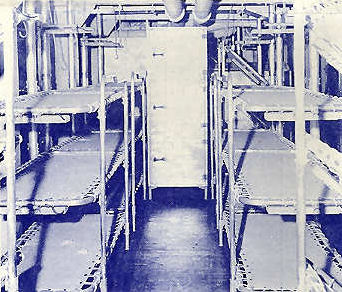
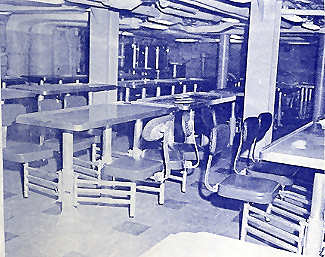
While in Norfolk, the balance crew was billeted in barracks A'14 and A'15 of the Naval Receiving Station, Norfolk. In mid-February a representative of the Naval Station fire department inspected the barracks and found them outstandingly clean and free of fire hazards and commented that they were in the best condition that they had been' for fifteen years--sure proof of the efficiency of the barracks detail headed by Boatswain's Mate First Class Andrew C. Besker, and evidence of the hard work put out by a large painting and clean up detail which renovated barracks which the TOPEKA detail occupied, as well as a barracks reserved for Allied Naval Personnel in Norfolk for training, The monumental task of reviewing service records and establishing the ship's, personnel handling procedures grew with machine like precision under the skilled guidance of Chief Personnelman Gino P. Marrinucci. Although some men were transferred to New York immediately upon completion of basic training, the majority of the balance crew which numbered over six hundred men in total, left Norfolk for New York a week before commissioning. |